Dt 880 Review: Real User Experience After 3 Months
I've been using the Dt 880 (250 Ω edition) for roughly three months now as my primary desktop listening and occasional mixing headphone. I bought it because I wanted a comfortable, detailed pair of cans that would let me sit through long sessions without fatigue and help me hear subtle details in acoustic and vocal tracks. What I found was a mostly stellar set of headphones that excel at clarity and separation, but that also carry a few real-world annoyances that owners should know about before buying.
Introduction — why I chose the Dt 880
Before buying I read a lot of opinions about the Dt 880 being a "neutral, detailed" headphone and often recommended as a step up from basic consumer headphones. I wanted something that wouldn't artificially hype the bass, would expose mix flaws, and would remain comfortable for multiple-hour listening. I also wanted a semi-open design so the soundstage would feel a bit more natural than a closed-back pair.
My unit is the 250 Ω version, which I chose intentionally for desktop use with a small DAC/headphone amp. I've used it with a laptop headphone jack, with a portable DAC/amp, and with a mid-range desktop amp. Over the past three months I put it through daily music listening, some light mixing, watching films, and a fair amount of podcast listening. Below are the things I noticed that I think matter most to someone living with these headphones day-to-day.
Detailed product review and analysis
Sound signature and balance
In my experience the Dt 880 leans toward a neutral-to-bright signature. The treble is where these headphones shine and also where they can be contentious. High-frequency detail and micro dynamics are very present: cymbals, string harmonics, and breathy vocal consonants come through with clarity. If you like hearing room reflections, string bow noise, or the texture of a snare, the Dt 880 delivers.
What I appreciated was the transparency in the midrange. Vocals sit cleanly and retain their timbral character — male and female voices both come through naturally without sounding boxy. Acoustic guitars and pianos have good definition, and the separation between instruments is excellent. The semi-open design gives a sense of air and depth that makes acoustic recordings feel more lifelike than many closed-back alternatives I've used.
The bass is accurate rather than exaggerated. I noticed a tight, controlled low end that reveals what the bass guitar or kick drum is actually doing. If you want weight or chest-thumping sub-bass for EDM or hip-hop, the Dt 880 will feel restrained compared to bass-forward consumer cans. For me, that restraint was helpful for critical listening and mixing, but it was less fun for casual, bass-heavy listening unless I used an EQ boost.
Soundstage and imaging
The soundstage is noticeably wider than closed-back headphones and gives a realistic sense of left-to-right placement. Imaging is one of the Dt 880's strengths — panning and instrument placement are precise. When I listen to well-produced live or orchestral recordings, I can pick out individual players and their position in the recording space.
Comfort and ergonomics
Comfort is a major reason I kept these. The velour earpads are soft and breathable; I can wear the Dt 880 for 2–4 hour stretches without the kind of ear heat or soreness I get from some leather-padded headphones. The headband distributes weight well. Initially the clamping force felt a bit strong (first few days it pressed noticeably on the temples), but after a short break-in period the fit relaxed and became less intrusive.
Find top-rated Audio & Headphones products at great prices.
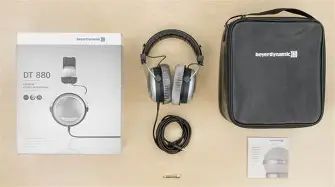
See Deals →One thing I noticed was that the pads are replaceable, which I appreciate — after months of use I can see the pads flattening slightly, and being able to swap them out extends longevity. On the downside, the cable on my unit is non-detachable and relatively stiff. That made desk routing a little messy and replacement more of a hassle if I ever need a different length or a broken cable replaced.
Build quality and longevity
These headphones feel sturdy. The headband has metal reinforcement and the overall construction is more durable than many budget models. The detachable parts are limited (pads and possibly grill) but the core structure feels like it will survive daily use for years. After three months of careful but regular use I haven't experienced any structural issues.
Portability and isolation
The Dt 880 is not a portable or isolation-friendly headphone. Being semi-open, they leak sound and let ambient noise in. I wouldn't use them on public transport or in noisy cafes. They are best suited for quiet rooms, home studios, or offices where sound leakage and external noise are not a problem.
Amplification needs
Because my unit is the 250 Ω edition, driving them from a phone or basic laptop headphone jack was underwhelming — low-end extensio…Use cases that worked best for me
- Critical listening and casual mixing: the neutrality and detail help expose flaws and bring clarity.
- Classical, jazz, and acoustic music: instruments and hall ambience feel natural and spacious.
- Long listening sessions: the comfort and breathability make for fatigue-free hours.
Use cases that were less ideal
- Portable listening or commuting due to leakage and poor isolation.
- Bass-heavy music lovers who want more sub-bass punch without EQ.
- Anyone who expects true "consumer" V-shaped sound with boosted low end.
Pros & Cons
- Pros:
- Excellent midrange clarity and vocal presence.
- Great imaging and separation; a roomy semi-open soundstage.
- Comfortable velour pads for long sessions.
- Solid build quality with replaceable earpads.
- Neutral, revealing signature helpful for critical listening.
- Cons:
- Treble can be bright or fatiguing on poorly mastered tracks.
- Limited bass impact for fans of heavy low-end without EQ.
- Non-detachable/stiff cable on my unit is inconvenient.
- Poor isolation and sound leakage make them unsuitable for noisy environments.
- 250 Ω version needs a proper amp for full dynamics.
Comparison table — Dt 880 vs similar options
| Model | Type | Common Impedance Options | Typical Sound Signature | Best For |
|---|---|---|---|---|
| Dt 880 | Semi-open | 32 Ω / 250 Ω | Neutral to bright; detailed treble, controlled bass | Critical listening, acoustic, long sessions at home |
| Dt 990 | Open-back | 32 Ω / 250 Ω | Sharper treble, wider stage, slightly boosted highs | Wide soundstage lovers, classical and orchestral work |
| Dt 770 | Closed-back | 32 Ω / 80 Ω / 250 Ω | More bass emphasis, closed, warm | Tracking, noisy environments, bass-heavy listening |
Buying guide — what to consider before you buy
1. Which impedance should you choose?
Decide how you plan to use the headphones. If you mainly listen on a phone or portable player without a dedicated DAC/amp, choose a lower impedance (e.g., 32 Ω) — it will be louder and more usable from weak sources. If you plan to use them at a desk with a DAC/amp, the 250 Ω version delivers better control, resolution, and a more "opened-up" sound. In my experience the 250 Ω gave clearer separation and more authority in the bass once properly driven.
2. Consider the design: semi-open vs open vs closed
Semi-open (like the Dt 880) offers a middle ground: more air than closed-back but less leakage than fully open. If you need isolation or portability pick closed-back. If you want the widest possible stage and listen only in quiet environments, open-back could be preferable.
3. Comfort and pad materials
Velour pads are breathable and comfortable for long sessions — I found the Dt 880's pads to be a big reason I wore them for hours. Check whether pads are replaceable (they are) and whether you prefer velour or leather alternatives.
Looking for the best Audio & Headphones deals on Amazon?
View Offers →4. Cable considerations
Check whether the cable is detachable. My Dt 880's cable is fixed and fairly stiff; that was a minor annoyance for desk tidy and eventual replacement. If you value easy cable swaps, look for a detachable design or plan on soldering or replacing the cable from a service center if it breaks.
5. Testing and returns
If possible, audition the headphones with music you know well. Pay attention to treble brightness and sibilance on vocal tracks, and test bass with a few bass-heavy songs to see if the low-end character matches your preference. Also check return policies so you can swap if the treble or fit doesn't suit you — these headphones polarize precisely on those two points.
6. Accessories and upgrades
Think about buying extra pads, a small amp or DAC if you choose 250 Ω, and a cable if you prefer different routing or length. Replacing pads after a few years is common and inexpensive; the ability to refresh the pads keeps the headphones comfortable for longer.
Final thoughts and conclusion
After three months of daily use, I've grown fond of the Dt 880. In my experience they're a highly capable tool for anyone who wants clarity, accurate mids, and a forgiving yet detailed treble response. They've been especially useful for listening to acoustic music, identifying mix problems, and sitting through long editing or listening sessions without discomfort.
That said, they are not perfect. The bright treble and occasional sibilance on poorly mixed tracks can be fatiguing, and the bass is intentionally restrained. If you want heavy sub-bass or need portability and isolation, this isn't the best match. Also, if you won't pair the 250 Ω version with an amp or DAC, you risk under-driving them and missing a lot of what they do well.
Overall, what I found was a headphone that rewards careful listening. Once I accepted its character — neutral with an emphasis on clarity — it became my go-to for long sessions and when I wanted to hear exactly what a recording contained. If that matches what you're looking for, the Dt 880 is a solid, long-lasting choice; if you prefer a warmer, bass-forward sound or need something for travel, consider other options instead.