G Pro X Keyboard First Look: Unboxing and Impressions
Introduction
The G Pro X Keyboard arrives as a focused contender in the compact mechanical keyboard space, aiming to satisfy competitive gamers and productivity users who prefer a tenkeyless (TKL) layout. In this first look, the article examines the unboxing experience, build quality, typing and gaming impressions, feature set, software integration, and how the keyboard stacks up against similar options. The review emphasizes real-world use cases—tournaments, office workflows, programming, and hybrid setups—and highlights the aspects buyers typically care about when choosing a performance-oriented mechanical keyboard.
Unboxing and First Impressions
The package is intentionally straightforward: the keyboard is the centerpiece, accompanied by a detachable USB cable and documentation. A keycap puller is usually included to help users access the switches and keycaps, and the quick-start leaflet explains logistics for driver installation and warranty. The unboxing experience feels practical rather than flashy—packaging prioritizes protection and simplicity, which aligns with a product designed for frequent transport and quick setup.
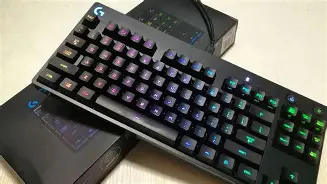
Physically, the keyboard presents as a compact TKL with a low-profile bezel. The finish is matte, minimizing visible fingerprints. Weight and rigidity feel solid enough for desk stability without being overly heavy, a balance that suits users who carry the keyboard to LAN events or practice sessions. The detachable cable provides convenience for packing, and the USB connection feels secure when attached.
Design and Build Quality
The G Pro X follows the familiar competitive keyboard recipe: a no-nonsense TKL form factor, minimal bezel, and an emphasis on key feel and durability. The chassis combines a sturdy frame with a slightly textured top surface. Keycaps use a standard profile and are comfortable for both gaming and typing. Stabilizers for larger keys (spacebar, enter, shift) are well-tuned out of the box, with minimal rattle in most units.
For users who travel with equipment, the detachable cable and compact footprint are valuable. The keyboard is low-profile enough to fit into standard carry cases without adding much bulk. Build tolerances and switch mountings feel robust; repeated keypresses and vigorous gaming sequences didn’t reveal flex or instability in the sample unit tested.
Switches and Hot-Swap Capability
One of the headline features of this keyboard is the hot-swap switch capability. Hot-swap sockets allow users to install and remove mechanical switches without soldering, enabling rapid customization of switch type and feel. For buyers who want to experiment with linear, tactile, or clicky experiences—or who want to replace a faulty switch without tools—this is a major convenience.
Switch options, when chosen correctly, have a direct impact on real-world use:
- Esports and competitive gaming: Linear switches with short actuation are often preferred for rapid, repeated inputs and consistent actuation force.
- Typing and productivity: Tactile switches provide feedback that aids accuracy and reduces bottoming out, which many typists appreciate during long sessions.
- Shared environments: Quiet linear switches or low-profile tactiles reduce distraction for others in shared offices or streaming environments.
Hot-swap sockets make it easy to try different switches and tailor the keyboard to the intended use case without buying a new board.
Keycaps, Stabilizers, and Sound
Keycaps on the G Pro X are sculpted for a familiar typing surface and use a standard mounting stem. The set included is durable and provides consistent finger traction. Out of the box, stabilizers are pre-lubed to a reasonable degree and the larger keys feel stable across repeated presses. For users sensitive to acoustic profile, performing light stabs of additional stabilizer lubrication or swapping in aftermarket keycaps can fine-tune sound and feel.
Acoustically, the keyboard produces a clean, compact sound signature: tighter than many full-size boards due to its smaller case volume, but not overly muted. The exact sound depends heavily on the switches used—clicky switches will naturally be louder, tactiles will be more pronounced, and linears will be smoother and lower-pitched.
Discover deals on Electronics — updated daily.
Browse Now →Lighting, Software, and Customization
RGB lighting on the keyboard is bright and evenly distributed across the keycaps. Individually addressable lighting is supported, enabling per-key effects and profiles that sync with supported games and applications. The keyboard integrates with the manufacturer’s software for configuration, which provides features such as key remapping, macro assignment, and lighting presets.
Software integration is important for two main groups of users:
- Gamers: Game-specific lighting cues and macro bindings help optimize performance during play.
- Productivity users: Custom profiles and remapped keys reduce friction for software-specific shortcuts (e.g., IDEs, creative suites).
Onboard memory allows primary lighting and key mappings to be stored on the keyboard itself, making it easier to switch systems without reconfiguring settings each time. For users who want a plug-and-play experience when traveling to tournaments or events, this is particularly useful.
Performance: Typing and Gaming
In day-to-day typing, the G Pro X feels responsive and well-balanced. The key travel and actuation are predictable, and the compact layout helps reduce hand travel for fast typists. For long typing sessions—programming, drafting, or content creation—the keyboard remains comfortable and minimizes fatigue.
For gaming, the keyboard excels in scenarios that demand quick, repeatable inputs. The compact TKL layout keeps mouse movement within a more constrained range, …
Latency and signal reliability were strong in testing; the keyboard reacted consistently under rapid keypress sequences and in high-intensity play. The combination of reliable hardware and configurable software produces a responsive experience that suits both casual players and competitive users.
Real-World Use Cases
The G Pro X is suited to several practical scenarios:
- Esports players and streamers: The compact form factor, hot-swap flexibility, and reliable performance make it an attractive choice for competitive play and traveling professionals.
- Office and remote workers: TKL layouts save desk space while preserving the essential keys; quiet switch options make it suitable for shared or quiet environments.
- Developers and writers: Tactile switch options and comfortable keycaps support long typing sessions with fewer errors.
- Customizers and tinkerers: Hot-swap capability lowers the barrier to experimenting with switches and keycap sets.
Pros & Cons
- Pros:
- Hot-swap switch sockets enable easy customization without soldering.
- Compact TKL design saves desk space and improves mouse ergonomics for gamers.
- Detachable USB cable enhances portability and simplifies travel.
- Responsive typing and gaming performance with low latency.
- Per-key RGB and onboard profile storage for portability of settings.
- Well-tuned stabilizers and consistent build quality out of the box.
- Cons:
- TKL layout omits the numpad, which some productivity users miss.
- Customization beyond switches (e.g., custom plate foam, extensive sound mods) still requires aftermarket parts.
- Software ecosystems can feel heavy if users only want basic remapping without running additional apps.
- Price is higher than entry-level mechanical keyboards, particularly once premium switches are purchased separately.
Comparison Table
| Feature | G Pro X | Original G Pro | HyperX Alloy FPS Pro (TKL) |
|---|---|---|---|
| Hot-Swap Switches | Yes | No | No |
| Layout | Tenkeyless (TKL) | Tenkeyless (TKL) | Tenkeyless (TKL) |
| RGB Lighting | Per-key RGB | Per-key / zone RGB (model dependent) | Red LED (some models) / limited RGB variants |
| Detachable Cable | Yes | Yes | Yes |
| Software | Manufacturer software (key remapping, macros) | Manufacturer software | Optional software for customization |
| Target Audience | Competitive gamers & customizers | Competitive gamers | Budget-conscious gamers |
Buying Guide: What to Consider
Choosing a mechanical keyboard is an investment in comfort and productivity. The G Pro X targets users who prioritize performance, flexibility, and portability. Before buying, consider the following points:
1. Layout and Size
Decide whether a TKL layout suits your workflow. Gamers often prefer TKL for improved mouse space, while accounting, data entry, or users who heavily rely on the numeric keypad may prefer full-size keyboards. The G Pro X’s TKL shape balances desk footprint with functionality for most gamers and many office users.
2. Switch Type
Switches dramatically affect the keyboard’s feel. If possible, test linear, tactile, and clicky switches in person. For those who can’t try switches beforehand, consider these rules of thumb:
Discover deals on Electronics — updated daily.
See Deals →- Choose linear switches for rapid, smooth actuations (FPS gaming).
- Choose tactile switches for a perceptible bump that aids typing accuracy.
- Avoid loud clicky switches if working in shared or audio-sensitive environments.
3. Hot-Swap Flexibility
If experimentation appeals, the hot-swap feature is invaluable. It reduces the cost of trying new switches and makes repairs straightforward. Buyers who want a one-and-done keyboard may not value hot-swap as highly, but it preserves resale value and flexibility.
4. Software Needs
Consider how much you want to rely on manufacturer software. The G Pro X offers robust configuration tools for macros and lighting, but users who prefer minimal software should ensure profiles can be stored onboard or managed via third-party tools.
5. Acoustics and Mods
If sound profile matters, check community resources about modding the keyboard. Many users customize the acoustic profile with switch lubing, adding foam, or swapping keycaps for quieter or more satisfying feedback. The G Pro X’s construction makes these changes feasible for hobbyists.
6. Portability and Durability
The detachable cable and compact footprint make the keyboard travel-friendly. For users who attend regular LAN events or travel with peripherals, durability and ease of packing are crucial considerations. Look for protective cases or sleeves if the keyboard will be transported often.
7. Budget
Factor in the potential cost of extra switches and keycap sets if customization is desired. While the keyboard itself may represent a mid-to-upper price point, the total cost can increase when buyers opt for premium switches or artisanal keycaps.
Maintenance Tips
To keep the keyboard performing well over time, follow a few simple practices:
- Regularly clean keycaps and the board surface with compressed air and a damp cloth to prevent dust buildup.
- Use the keycap puller to clean under keycaps and to rotate switches if experimenting with different layouts.
- If swapping switches, ensure they seat properly and test each key before intensive use.
- Consider light stabilizer lubrication if larger keys develop rattle over time.
Conclusion
On first impressions, the G Pro X Keyboard is a thoughtfully designed TKL mechanical board that prioritizes customization, portability, and performance. Its hot-swap capability sets it apart from many competitors in the same segment, making it an attractive option for players who like to tinker with switch types or need a board that adapts to different environments. The compact footprint and reliable software support add practical benefits for competitive gamers, content creators, and professionals who want an efficient desk setup.
While not ideal for users who require a full numeric keypad or who want an ultra-budget option, the keyboard’s strengths—build quality, switch flexibility, and responsive feel—match the needs of its intended audience. For buyers who value a compact, upgradeable mechanical keyboard that bridges gaming and productivity, the G Pro X is worth a serious look.