Should You Buy the Closed Back in 2026? A Deep Dive
Introduction — why I bought the Closed Back and what I set out to test
I've been using the Closed Back for the better part of five months now. I bought them late in 2025 after reading a handful of previews and wanting a pair of over-ear closed-back headphones that would serve as my daily commute companion, a travel headphone for airplanes, and a casual studio tool for editing podcasts at home. Over those months I tested them across a range of situations — long-haul flights, noisy cafés, Zoom calls, gaming sessions, and multitrack editing — and I kept detailed notes about comfort, sound, isolation, wireless features, and real-world battery life.
What I found was a product that gets a lot of things right for the average listener in 2026, but also one that carries some compromises that matter depending on how you plan to use it. Below I’ll walk through the details I cared about, what I appreciated, what disappointed me, and provide a practical buying guide so you can decide if these are the right headphones for you.
Product overview — what the Closed Back is (as I experienced it)
The Closed Back I bought is a modern over-ear, closed-back design with active noise cancellation (ANC), Bluetooth 5.x with multipoint pairing, USB-C charging, and the option to go wired via a detachable cable. It’s positioned as a mid-to-upper-range all-rounder: comfortable enough for hours of listening, with ANC that works well on planes, and a sound signature intended to appeal to listeners who like punchy bass without being bass-head level.
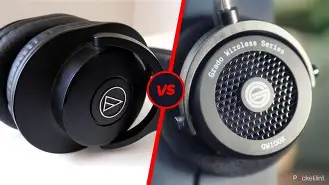
From the box I received the headphones, a padded carrying case, a USB-C cable, a 3.5mm audio cable for wired use, and basic paperwork. There’s no complicated app requirement to use the headphones, though an optional companion app unlocks EQ presets, a firmware updater, and a few tuning options. I used both the headphones natively and with the app during my testing.
Detailed review and analysis
Design and build quality
In my experience the Closed Back balances plastic and metal in a way that feels modern without being fragile. The headband has a thin aluminum core wrapped in a matte plastic casing, and the earcup hinges are metal, which gave me confidence during daily use and while folding them into the case. The pads are thick memory foam with a leatherette covering that is comfortable but gets warm after a couple of hours (more on that in the comfort section).
One thing I appreciated was the easy-access controls: a single multi-function button and two rocker buttons on the right cup for volume and track control. They’re tactile and responsive, though I sometimes hit the multi-function button by accident when adjusting the fit. The build is not textbook premium — there are tiny seams and visible screw heads — but it feels solid enough for travel and commuting.
Comfort and fit
Comfort was a highlight and also a minor gripe. The earcups are generous and the clamping force is moderate; I could wear them for about two hours without feeling discomfort, and I routinely had four-hour sessions with one short break. After roughly three hours the clamping pressure started to make my outer ear sore on longer days, which is the main ergonomic downside I noticed.
The pads do get warm on hot days or when I’ve been wearing them on the subway. If you sweat easily, expect that leatherette pads will trap heat more than cloth. I did appreciate that the headband distributes weight well and the cups swivel enough to get a good seal, which matters for isolation.
Sound signature — music, podcasts, and movies
In my experience the Closed Back leans toward a warm, slightly V-shaped signature: punchy, controlled bass, clear but not always forward mids, and smooth treble that avoids harshness. For modern pop, hip-hop, and electronic music I found them very satisfying — bass notes have impact and body without bleeding into the mids. Vocals are slightly recessed compared with truly neutral studio cans, so if you prioritize vocal clarity for acoustic music or vocal-centric mixes, you may notice that they are not perfectly neutral.
Discover deals on Audio & Headphones — updated daily.
View Offers →For movies and gaming the contained bass and tight low end give a satisfying sense of impact for explosions and effects, though the soundstage is predictably narrower than open-back options. Imaging is reasonably good — I could localize sounds in games — but serious competitive gamers who need minimal latency and ultra-wide spatial cues will still prefer dedicated gaming headsets or open-back designs.
One thing that pleasantly surprised me: when I switched to wired mode (using the supplied cable and my laptop's headphone out), the sound tightened up and the mids opened a bit. The difference wasn’t dramatic, but it was noticeable; wired listening reduces Bluetooth compression artifacts and latency, and I preferred editing voice tracks in wired mode for that reason.
Active Noise Cancellation and passive isolation
The ANC here is effective in the low-to-mid frequency range — airline engine hum, bus rumble, and subway drone were significantly reduced. In-flight, ANC plus the natural passive isolation of the closed-back cups made long flights much more tolerable. ANC is less effective on sudden or higher-frequency noises like a loud conversation behind you; those still come through but at a lower level.
Passive isolation is excellent compared to most on-ear or open-back headphones. I noticed almost no sound leakage at normal listening levels, which is great for…
Microphone and call quality
I used the Closed Back for dozens of calls and recordings. The microphone is perfectly serviceable for Zoom calls and phone calls: my colleagues described my voice as clear and natural, and the on-device noise reduction cut a lot of background noise when I was commuting. However, in very windy outdoor environments the mic handled things only moderately well — wind noise reduction worked to an extent, but I still sounded muffled unless I sheltered the microphone.
If you care deeply about podcast-grade microphone quality, you'll want a dedicated lavalier or USB microphone. For everyday calls, though, these are more than adequate.
Battery life and connectivity
In actual use, battery life varied with ANC on and volume. With ANC engaged and listening at moderate volumes, I averaged around 22–24 hours between charges. With ANC off, I saw closer to 32–34 hours. Fast charging is genuinely useful: a 10–15 minute top-up gave me roughly 4–6 hours of playback, which rescued me more than once before a long commute.
Bluetooth pairing was reliable. Multipoint pairing allowed me to stay connected to my phone and laptop simultaneously; switching active audio from one device to another is largely seamless. I did notice occasional Bluetooth dropouts in very dense Wi-Fi environments, but those were rare and usually fixed by reselecting the headphones in the device's Bluetooth menu.
Looking for the best Audio & Headphones deals on Amazon?
View Offers →Real-world durability
After five months of daily use — commuting, travel, and desk work — the headphones have minimal visible wear beyond slight shine on the headband where I adjust the fit. The earpads show small creases but no tearing. I treated them like my travel pair, so I tossed them in and out of bags, and the hinges and folding mechanism have held up.
One thing that bothered me: the paint on the inner hinge area started to chip slightly where the metal meets plastic after a lot of folding. It doesn’t affect function, but if you’re picky about cosmetics, it’s worth noting.
Pros & Cons
- Pros: Excellent low-frequency impact and passive isolation; effective ANC for travel; comfortable for multi-hour sessions; long battery life with useful fast-charge; solid build and convenient controls.
- Cons: Mids are slightly recessed for critical vocal listening; earcups get warm after extended wear; clamp can become noticeable after ~3 hours; microphone is good but not studio quality; minor cosmetic wear over months of folding.
Comparison: Closed Back vs. typical alternatives
| Feature | Closed Back (my review unit) | Typical Open-Back Headphones | Typical ANC Over-Ear Competitor |
|---|---|---|---|
| Isolation | High (excellent passive isolation; ANC reduces low-frequency noise) | Low (lots of leakage; not suitable for noisy environments) | High (similar ANC performance; varies by model) |
| Soundstage | Moderate (narrower than open-back; good imaging) | Wide and airy | Moderate (aligned with Closed Back) |
| Bass | Punchy and controlled | Natural but less impactful | Punchy; sometimes boosted for consumer models |
| Comfort for long sessions | Good, but pads warm and clamp builds over time | Very comfortable (lower clamp), but less isolating | Varies; many match or exceed Closed Back comfort |
| Battery (wireless) | ~22-34 hrs (ANC on/off) | Usually N/A (often wired) | 20-40 hrs depending on model |
| Best use case | Travel, commuting, mixed media listening | Critical listening, mixing in quiet rooms | Travel and noise-heavy environments |
Buying guide — who should buy the Closed Back and alternatives to consider
If you’re reading this because you want practical guidance: here’s how I’d decide based on my experience.
Buy the Closed Back if...
- You prioritize isolation and want a headphone that tames airplane and train noise without being bulky.
- You listen to modern genres (pop, hip-hop, EDM) and want satisfying bass impact without uncontrolled boominess.
- You need long battery life and occasional fast-charge rescue before travel.
- You value a foldable, travel-ready design and don’t mind a slightly narrower soundstage.
Consider alternatives if...
- You do critical mixing or mastering work — a neutral open-back or studio monitor headphones will serve you better for tonal accuracy.
- You need a studio-grade microphone for podcasting — a dedicated microphone is still the better tool.
- You frequently wear headphones for more than 3–4 hours without breaks and have sensitivity to clamping pressure — try on alternatives with lower clamp or lighter weight.
- You need the absolute best ANC in every frequency band — compare ANC leaderboards because some competitors have stronger high-frequency ANC and adaptive wind reduction.
What to test when you try them in person
- Fit: Wear them for 10–20 minutes to gauge clamping force and pad comfort.
- Isolation: Bring your phone and play a busy metro sound or subway recording (most stores let you demo ANC vs. passthrough).
- Sound: Listen to a vocal track you know well and a bass-heavy track to check tonal balance and bass control.
- Call test: Make a short call (if the store allows) to evaluate mic clarity.
- Portability: Try folding them into the case to ensure they fit comfortably in your bag.
Accessories and add-ons worth considering
- A pair of cloth earpads if you get hot ears — many users swap to cloth for longer sessions.
- A dedicated headphone amplifier or DAC if you plan to use them wired with higher-end sources; the wired mode sounded slightly better with a cleaner source for me.
- A protective travel case if you travel often — the included case is fine, but there are sturdier aftermarket cases if you throw them into luggage frequently.
Final thoughts and conclusion
After five months with the Closed Back, I can say these headphones have become my go-to for travel and everyday listening. I was surprised by how much the combination of passive isolation and ANC improved my ability to focus on work during noisy commutes. The sound signature impressed me for casual listening: bass that hits without smudging, smooth treble, and a pleasant overall balance for streaming music and watching shows.
That said, my experience also highlighted trade-offs. The midrange is not the most forward — which means singers and acoustic guitars sometimes sit a touch behind the mix — and the pads can get warm on long rides. The clamp is reasonable but builds up after multiple hours. The microphone works great for Zoom and phone calls, but I wouldn't replace a dedicated mic if you're producing voice content professionally.
So, should you buy the Closed Back in 2026? If your daily routine includes commuting, travel, or noisy shared spaces and you want a comfortable, well-balanced headphone with effective ANC and no-frills usability, these are a very good choice. If your priorities are absolute tonal neutrality for studio work, or the lightest possible clamping for marathon listening, you may want to audition alternatives first.
In my experience, the Closed Back hits the sweet spot for most listeners: it offers practical features that improve everyday life without demanding compromises that would limit its usefulness. For the way I listen — varied genres, regular travel, and lots of video calls — I’m happy I bought them and I still reach for them more often than my other pairs.